EraDrive Cleared to Test Autonomous Spacecraft Maneuvering on NASA's Starling Mission
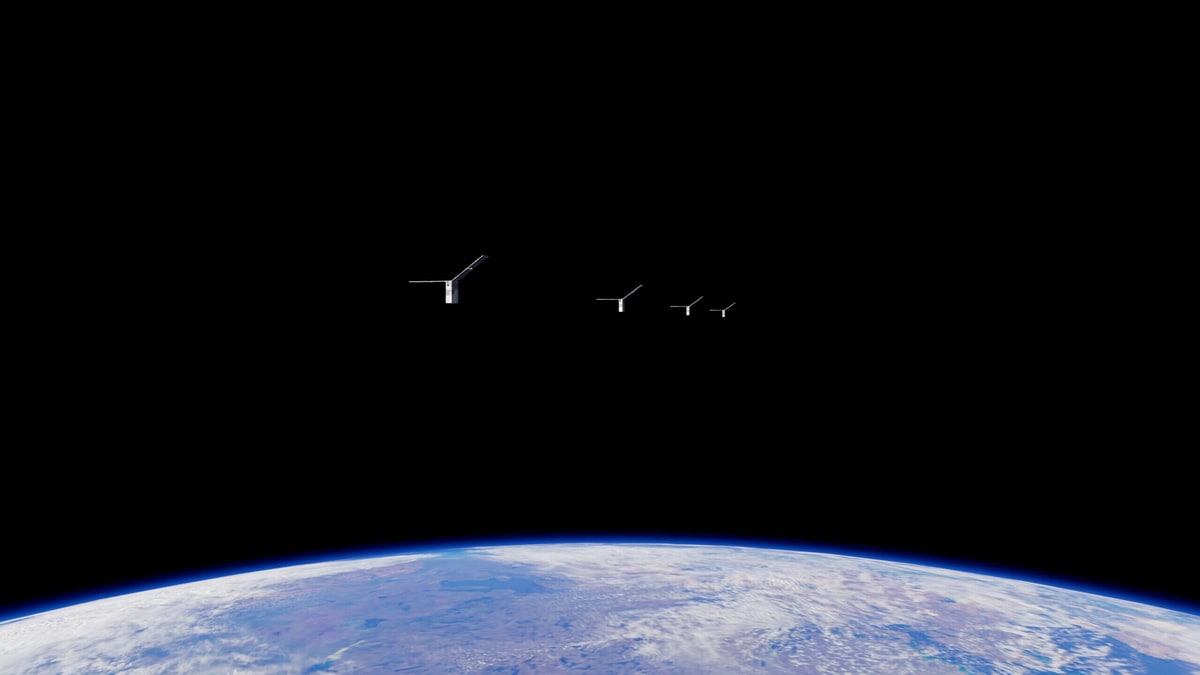
As orbital congestion and GPS vulnerabilities expose the limits of ground-controlled satellites, California-based startup EraDrive has secured clearance to test its autonomous maneuvering software aboard NASA's Starling swarm.
As the space economy scales, the traditional method of flying satellites—relying on continuous ground commands and GPS signals—is becoming a critical bottleneck. Orbital congestion is rising, and contested environments frequently experience navigation jamming. To address this, California-based space tech startup EraDrive has been cleared to proceed with autonomous maneuvering experiments aboard NASA's Starling mission, marking a significant step toward self-driving spacecraft.
Spun out of Stanford University's Space Rendezvous Laboratory in 2025, EraDrive develops AI-native software and hardware modules that allow satellites to perceive their surroundings and make decisions at the edge. During the upcoming Starling experiments, the startup's software will operate aboard a swarm of four CubeSats in low Earth orbit. Instead of waiting for ground operators to upload corrective commands, the spacecraft will use onboard star trackers and computer vision to calculate their relative positions and execute trajectory adjustments autonomously.
This approach fundamentally shifts how orbital traffic is managed. While legacy systems rely on radar tracking from Earth and rule-based micromanagement, EraDrive's technology enables rendezvous and proximity operations (RPO) and collision avoidance entirely in orbit. If successful, the demonstration could pave the way for deploying these autonomy modules across hundreds of commercial satellites, creating a decentralized space traffic intelligence network that operates independently of vulnerable terrestrial infrastructure.
INTELLIGENCE BRIEF
WHY IT MATTERS
Transitioning from ground-in-the-loop operations to edge autonomy is essential for scaling satellite constellations safely. EraDrive's approach allows spacecraft to navigate and avoid collisions even when communications are severed or GPS is jammed.
WHO IS INVOLVED
EraDrive, NASA, Sumant Sharma (CEO), Justin Kruger (CTO), Simone D'Amico (CSO)
MARKET IMPACT
As both commercial operators and defense agencies prioritize resilient space architectures, successful in-orbit autonomy demonstrations will accelerate the adoption of decentralized space traffic management systems.
This story was drafted with AI assistance and reviewed by TurkSpark editors before publication. Facts, figures, and names may be inaccurate — verify important details independently.
AST SpaceMobile Secures Brazilian Spectrum to Bring Direct-to-Device Broadband to the Amazon
Read
Katalyst Space's Failed In-Orbit Rescue Forces NASA to Retire the 22-Year-Old Swift Telescope
Read