Space Mirror Startup Reflect Orbital Faces Backlash Over 'Sunlight on Demand' Tests
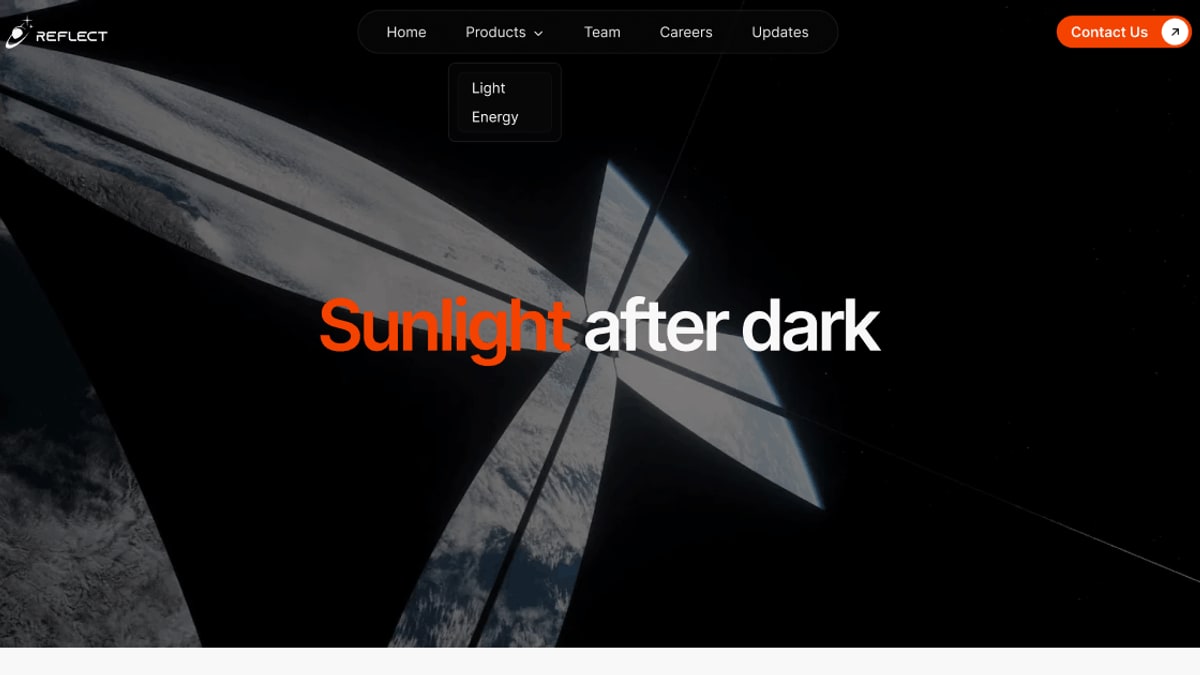
California-based Reflect Orbital is facing mounting backlash after a ground demonstration of its 'sunlight-on-demand' satellite technology startled residents and drew fire from astronomers.
As the commercial space industry moves beyond data transmission, new concepts are beginning to clash with terrestrial realities. California-based startup Reflect Orbital, which aims to deploy thousands of mirror-equipped satellites to beam sunlight onto Earth after dark, is facing mounting backlash over light pollution and orbital regulation.
The controversy escalated this week following a ground-based demonstration in Lone Pine, California. To simulate the illumination of its planned Eärendil-1 prototype satellite, the company used powerful ground spotlights to light up the desert landscape. While intended to showcase how the technology could assist search-and-rescue teams, the sudden illumination startled local residents and prompted environmental groups to formally challenge the startup's Federal Communications Commission (FCC) authorization.
Unlike traditional Earth observation constellations, Reflect Orbital plans to operate a network of 50,000 satellites at a 625-kilometer altitude. Each spacecraft will unfurl a massive reflective film designed to direct a five-kilometer-wide patch of sunlight down to specific targets. The company pitches the system as a way to extend the operating hours of solar farms, but astronomers warn that the artificial light could severely disrupt ground-based observatories and nocturnal ecosystems.
Despite the terrestrial pushback, the startup is accelerating its deployment schedule. Reflect Orbital recently secured two dedicated launches with Indian private space company Skyroot Aerospace, aiming to bypass U.S. launch bottlenecks and put its first orbital mirrors to the test by 2027.
INTELLIGENCE BRIEF
WHY IT MATTERS
The backlash highlights a growing friction point in the space economy as startups propose physically altering the terrestrial environment from orbit. Regulatory frameworks like the FCC are increasingly forced to balance commercial innovation with the preservation of the night sky.
WHO IS INVOLVED
Reflect Orbital, CEO Ben Nowack, Skyroot Aerospace
MARKET IMPACT
The pushback could force regulators to establish stricter environmental impact assessments for mega-constellations. If successful, however, the technology could create a new market for orbital illumination services targeting the renewable energy sector.
This story was drafted with AI assistance and reviewed by TurkSpark editors before publication. Facts, figures, and names may be inaccurate — verify important details independently.
AST SpaceMobile Secures Brazilian Spectrum to Bring Direct-to-Device Broadband to the Amazon
Read
LegalTech Startup Caffrey Expands AI Regulatory Platform to Five International Markets
Read