Orca Aerospace lands $20M deal to bring 'full self-driving' to Orbital's space data centers
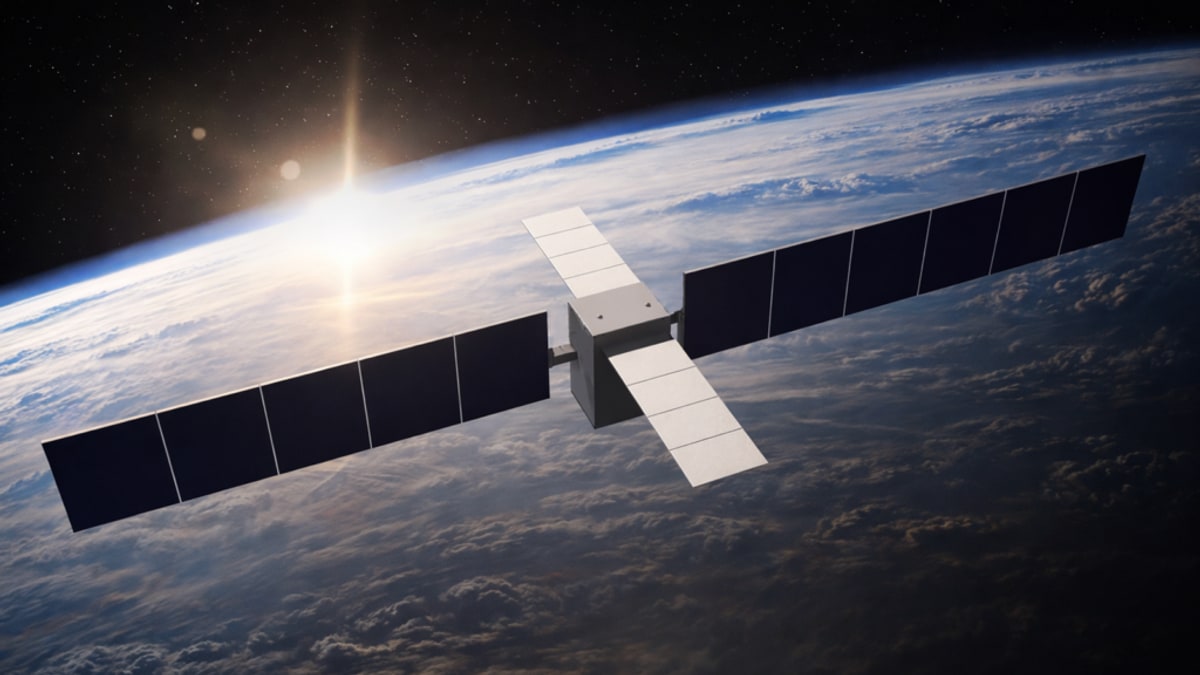
As low Earth orbit becomes increasingly congested, satellite operators are turning to onboard AI to handle collision avoidance and navigation without relying on massive human ground teams.
As the commercial space industry races to deploy mega-constellations in low Earth orbit, the logistical nightmare of managing thousands of satellites from the ground is becoming a critical bottleneck. To solve this, Los Angeles-based space data center startup Orbital has tapped Y Combinator-backed Orca Aerospace in a deal worth up to $20 million to deploy autonomous navigation software across its planned satellite fleet.
Rather than relying on constant human intervention for every maneuver, Orca's software acts as an onboard autopilot. The system uses a localized AI model to suggest actions—such as adjusting an orbit to avoid debris—while a deterministic safety kernel ensures the commands do not violate the spacecraft's physical limits. The software will initially run in a "shadow mode" to send telemetry back to Earth for review before gradually taking full control of Orbital's satellites.
Orbital CEO Euwyn Poon likened the integration to Tesla's full self-driving mode, emphasizing that scaling a constellation to 1,000 satellites by 2031 is impossible with traditional ground-control teams. For dawn-dusk sun-synchronous orbits, which are particularly crowded, this level of edge computing represents a major shift. By moving decision-making directly onto the spacecraft, operators can drastically reduce latency and operational costs, setting a new standard for how next-generation constellations are managed.
INTELLIGENCE BRIEF
WHY IT MATTERS
The partnership highlights a critical transition in space infrastructure. As the number of active satellites skyrockets, human-in-the-loop ground control is no longer scalable, making onboard autonomy a prerequisite for safe and economically viable mega-constellations.
WHO IS INVOLVED
Jacob Ososke (CEO and co-founder, Orca Aerospace), Euwyn Poon (CEO and founder, Orbital).
MARKET IMPACT
Shifting flight control from ground stations to the satellites themselves will drastically reduce the operational overhead of managing large constellations, paving the way for denser and more autonomous orbital networks.
This story was drafted with AI assistance and reviewed by TurkSpark editors before publication. Facts, figures, and names may be inaccurate — verify important details independently.
AST SpaceMobile Inks $1.3B Deal with Firefly Aerospace to Build Its Own Heavy-Lift Rocket
Read
Quantum Space Secures Piece of $185M NASA Contract to Deploy Cislunar 'Space Tugs'
Read