Starcloud Secures $250M to Build Orbital Data Centers, Valued at $2.3B with Nvidia Partnership
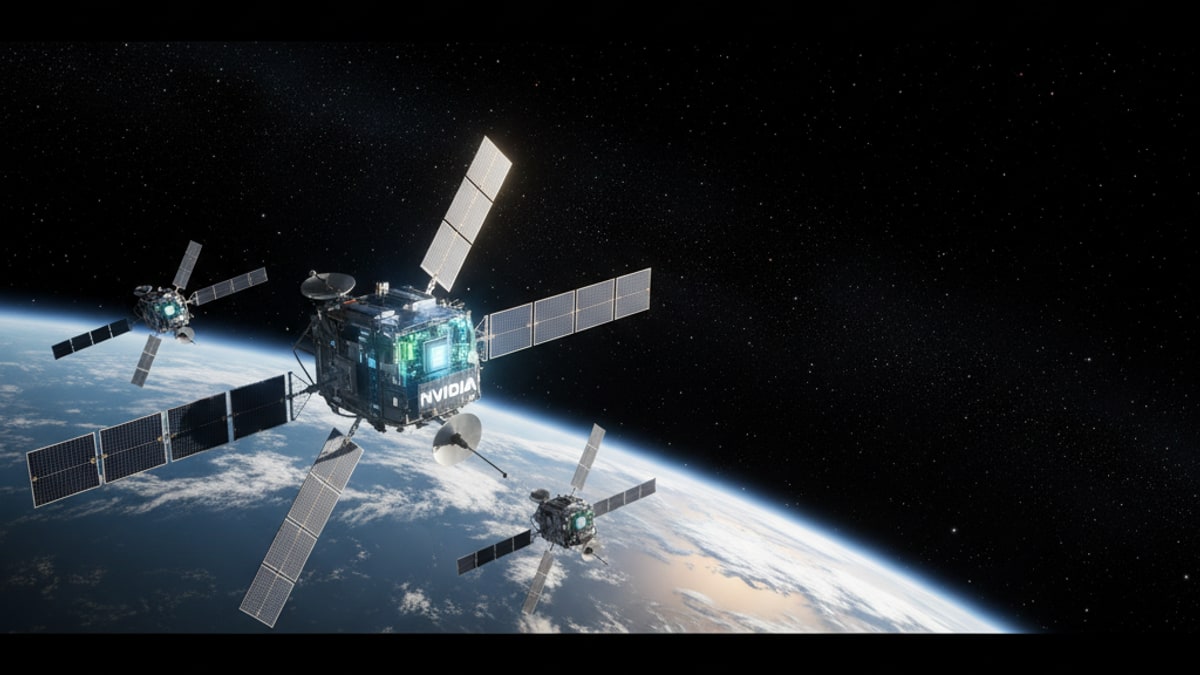
The escalating demand for AI computing power is pushing infrastructure beyond Earth's atmosphere, as Starcloud, a Redmond-based startup, has raised $250 million to develop orbital data centers, achieving a $2.3 billion valuation.
The race to provide scalable and efficient infrastructure for artificial intelligence workloads is moving into space. Starcloud, a startup founded in 2024, announced today it has secured $250 million in a Series A extension funding round, bringing its total capital raised to $450 million and valuing the company at $2.3 billion. This significant investment underscores the industry's belief in the potential of extraterrestrial computing to meet the insatiable demands of advanced AI models.
Manhattan West led the latest funding round, with notable participation from existing investors like Benchmark and EQT, alongside new strategic investors including Nvidia and Cisco Investments. Starcloud plans to use this capital to accelerate the creation of its constellation of data center satellites, which will be powered by Nvidia's next-generation Space-1 Vera Rubin Module AI chips. This move builds on their previous success in November 2025, when Starcloud successfully flew Nvidia's H100 GPU to orbit and trained a large language model, NanoGPT, marking a critical milestone for space-based AI processing.
The concept of orbital data centers addresses several challenges faced by terrestrial facilities, such as energy consumption, cooling, and real estate limitations. By leveraging the vacuum of space and potentially solar power, Starcloud aims to offer a more sustainable and scalable solution for high-performance computing. This approach could redefine the physical boundaries of AI infrastructure, offering unique advantages in latency for specific applications and geographical coverage.
While the technical and logistical hurdles of deploying and maintaining data centers in orbit are substantial, Starcloud's substantial funding and strategic partnership with Nvidia signal a serious commitment to overcoming these obstacles. The company is already building production lines for its Starcloud-3 spacecraft at a new 100,000-square-foot manufacturing facility in Woodinville, Washington, indicating a rapid scaling of its operations.
This development highlights a broader trend in the technology sector: the continuous search for novel environments to host increasingly powerful AI. As AI models grow in complexity and size, the demand for specialized, high-performance computing environments will only intensify, pushing companies like Starcloud to innovate in unconventional ways.
INTELLIGENCE BRIEF
WHY IT MATTERS
This funding round for Starcloud signifies a pivotal moment in AI infrastructure, demonstrating that the industry is exploring unconventional solutions to meet the ever-growing computational demands of artificial intelligence. Moving data centers to orbit could alleviate terrestrial constraints and unlock new possibilities for AI applications requiring low-latency global coverage. It also positions Nvidia as a key enabler in this nascent space-tech sector.
WHO IS INVOLVED
Starcloud's funding round was led by Manhattan West, with participation from Benchmark, EQT, Soma, NFX, 776, Nvidia, Cisco Investments, Cedar Capital, Goanna Capital, and Standard Capital.
MARKET IMPACT
This development could accelerate the convergence of space technology and AI, creating new markets for orbital infrastructure and specialized hardware. It also signals a potential shift in how large-scale AI training and inference are conducted, with implications for energy consumption, data sovereignty, and global access to advanced computing resources.
This story was drafted with AI assistance and reviewed by TurkSpark editors before publication. Facts, figures, and names may be inaccurate — verify important details independently.
Veeda AI Secures $90M Seed Round to Build 'World Models' for Physical AI
Read
Gravis Robotics Secures $200M from SoftBank to Automate Heavy Construction Machinery
Read