Katalyst Space Technologies Embarks on Daring Mission to Rescue NASA's Swift Telescope
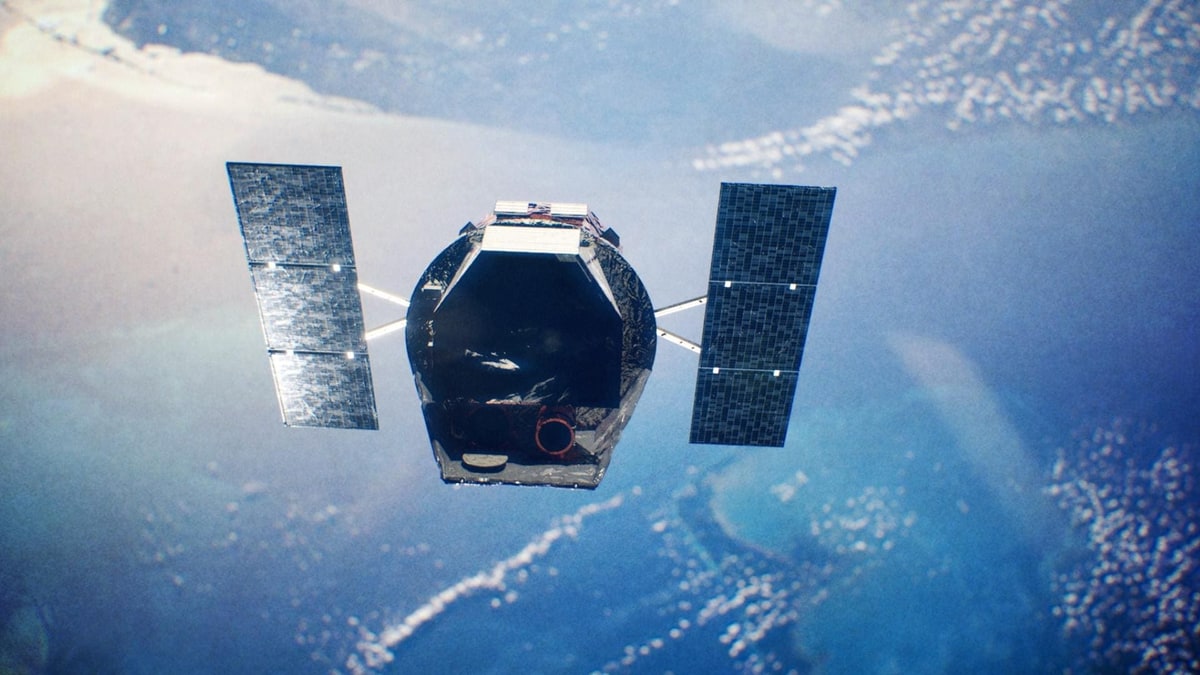
Arizona-based startup Katalyst Space Technologies has launched its LINK robotic spacecraft on a high-stakes mission to reboost NASA's Neil Gehrels Swift Observatory, developed in a remarkable 250 days to prevent the valuable telescope from de-orbiting.
In a testament to rapid innovation in the commercial space sector, Flagstaff, Arizona-based startup Katalyst Space Technologies has launched its LINK robotic servicing spacecraft on a critical mission to save NASA's Neil Gehrels Swift Observatory. The Swift telescope, a crucial asset for studying gamma-ray bursts since its launch in 2004, faces imminent re-entry into Earth's atmosphere due to increased atmospheric drag and orbital decay. Katalyst's daring intervention aims to reboost the observatory to a safer, sustainable orbit.
NASA awarded Katalyst Space Technologies the contract for this reboost mission in September 2025. What makes this endeavor particularly noteworthy is the unprecedented speed of development: Katalyst designed, built, tested, and launched the LINK spacecraft in a mere 250 days. This rapid turnaround highlights the growing capability of agile commercial entities to address urgent needs in space operations, a domain traditionally dominated by government agencies with longer development cycles.
The LINK spacecraft is equipped with advanced technologies, including electric propulsion, multiple rendezvous sensors, robotic arms, reaction-control thrusters, and complex software for proximity operations. These capabilities are essential for the intricate task of autonomously rendezvousing with, capturing, and then reboosting an unprepared government satellite. The success of this mission would not only preserve a half-billion-dollar scientific instrument but also validate robotic satellite servicing as a viable solution for extending the operational life of spacecraft.
Katalyst Space Technologies, founded in 2020, specializes in dynamic space operations, building autonomous robotic spacecraft for multi-mission purposes such as space domain awareness, life extension, and hardware upgrades. While the current mission is civil, their broader vision includes serving commercial, civil, and defense partners, aiming to create a more accessible and sustainable space economy.
The mission, if successful, could usher in a new era where aging or failing satellites are not simply abandoned but can be rescued, repaired, or upgraded in orbit, significantly impacting the long-term sustainability and efficiency of space infrastructure.
INTELLIGENCE BRIEF
WHY IT MATTERS
This mission by Katalyst Space Technologies underscores the critical role of agile startups in advancing complex space technologies. It demonstrates how commercial innovation can provide rapid, cost-effective solutions for preserving valuable space assets and enhancing the resilience of global space infrastructure, setting a precedent for future on-orbit servicing missions.
WHO IS INVOLVED
Katalyst Space Technologies, NASA, Kieran Wilson (LINK principal investigator at Katalyst Space), Ghonhee Lee (CEO of Katalyst Space Technologies), Robert Lamontagne (VP of Strategic Partnerships at Katalyst Space).
MARKET IMPACT
The success of this mission could significantly impact the space industry by proving the viability of on-orbit servicing, potentially reducing the need for costly satellite replacements and fostering a more sustainable approach to space asset management. It also highlights the growing convergence of AI and robotics in complex space operations.
This story was drafted with AI assistance and reviewed by TurkSpark editors before publication. Facts, figures, and names may be inaccurate — verify important details independently.

Kaiwang Data Secures Over $14M to Scale Embodied AI Data Infrastructure
Read
PaXini Raises RMB 1 Billion to Scale Embodied AI with Advanced Tactile Sensing
Read