XPENG's IRON Humanoid Robot Rolls Off Production Line, Signaling Mass Production Era
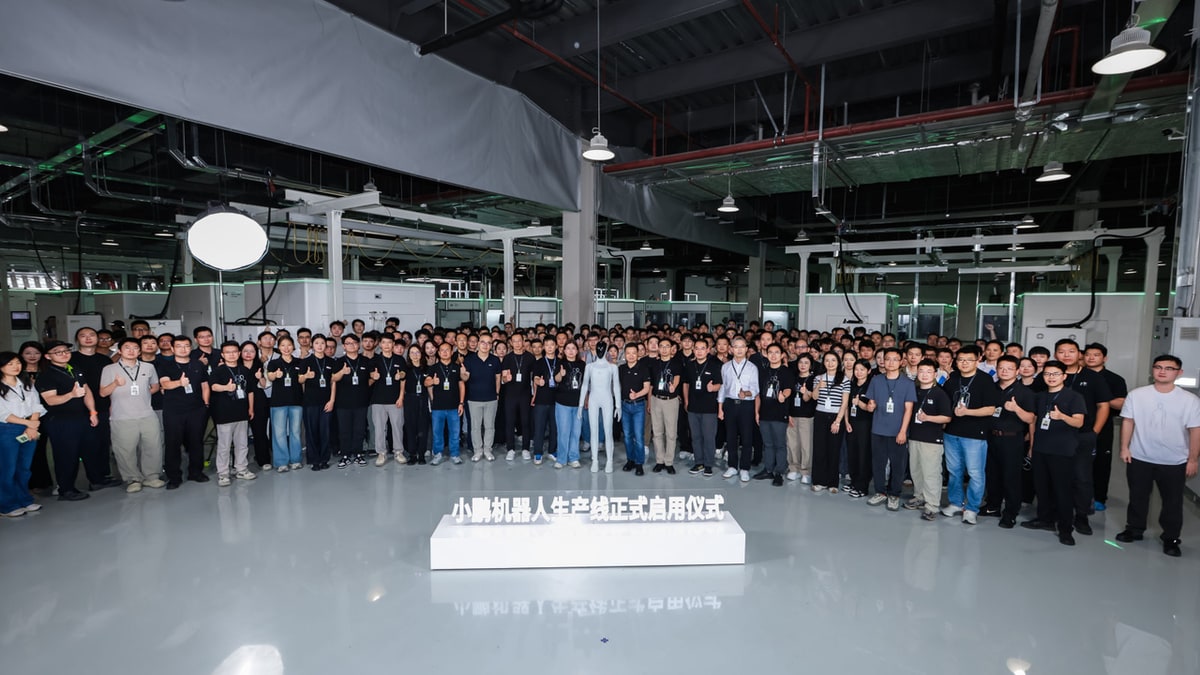
Humanoid robotics is entering a new phase as Chinese tech firm XPENG announces its IRON robot has autonomously rolled off its production line, marking a critical transition from R&D to mass manufacturing. This development could accelerate the deployment of general-purpose robots in various industries.
The burgeoning field of humanoid robotics is transitioning from experimental prototypes to industrial-scale manufacturing, a critical step toward broader real-world applications. Chinese technology firm XPENG has marked a significant advance in this shift, announcing that its IRON humanoid robot has autonomously navigated off its dedicated production line in Guangzhou. This development positions XPENG as a frontrunner in the race to commercialize general-purpose humanoid robots.
This achievement is notable because XPENG claims IRON is the world's first high-level, general-purpose humanoid robot to be manufactured on a production line. The company has integrated its automotive-grade quality systems into the robotics manufacturing process, with over 80% of core production processes automated. This approach aims to ensure precision, flexibility, and intelligence in robot production, laying the groundwork for rapid capacity expansion.
XPENG's strategy involves a fully in-house, end-to-end technology stack, encompassing the AI model, data infrastructure, computing power, robot body, and manufacturing systems. The IRON robot is built on XPENG's Physical AI foundation model, which is also utilized in its intelligent driving systems. This integrated development allows for continuous improvement through self-reinforcement in real-world environments.
The company plans to begin mass production of IRON by the end of 2026, with initial deployments in its own stores and campuses. A broader market launch and deliveries in China and overseas markets are slated for 2027, initially targeting retail and service sectors before expanding into industrial and home environments. This aggressive timeline suggests XPENG aims to capture first-mover advantage in the general-purpose humanoid robot market, a segment where competitors like Tesla's Optimus are perceived to be lagging.
This move by XPENG underscores a broader industry trend where advanced AI and robotics are converging to create more capable and versatile machines. The ability to mass-produce humanoid robots could significantly impact labor-intensive industries, enhance service automation, and redefine human-robot interaction in daily life. It also highlights the increasing competition and innovation emerging from Asian technology firms in the global robotics landscape.
INTELLIGENCE BRIEF
WHY IT MATTERS
This event signifies a critical shift in humanoid robotics from research and development to scalable manufacturing, making general-purpose robots a more tangible reality. It highlights the growing capability of Asian tech firms in advanced robotics and sets a new benchmark for production efficiency in the sector.
WHO IS INVOLVED
XPENG, He Xiaopeng (Chairman & CEO of XPENG).
MARKET IMPACT
The ability to mass-produce humanoid robots could disrupt labor markets, accelerate automation in service and industrial sectors, and intensify global competition in embodied AI. It pushes the boundaries of what is possible for human-robot interaction in daily life and commercial operations.
This story was drafted with AI assistance and reviewed by TurkSpark editors before publication. Facts, figures, and names may be inaccurate — verify important details independently.
NEURA Robotics and SECO Partner to Industrialize Physical AI in Europe
Read
Nscale Commits Up to $6 Billion in Compute to Power Figure's Humanoid Robots
Read