Satlyt Raises $8M Seed to Turn Satellites into a Distributed AI Cloud
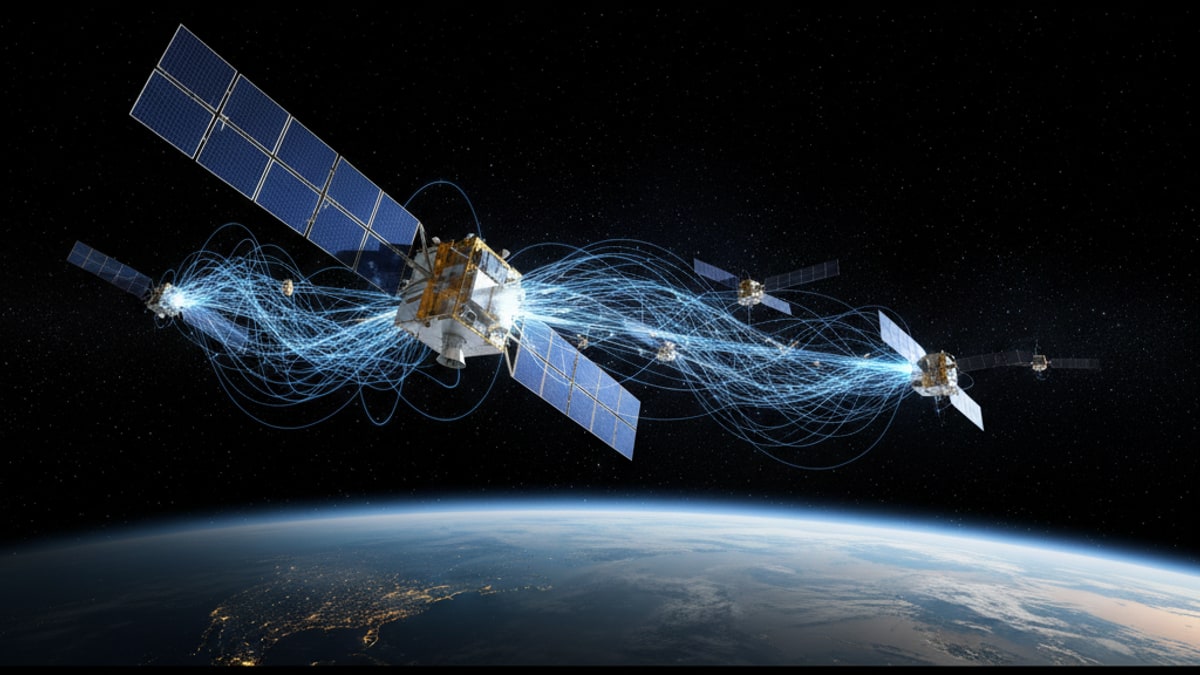
As satellite operators struggle with the immense cost and latency of downlinking raw data to Earth, space-tech startup Satlyt has raised $8 million to turn existing satellites into a distributed AI computing cloud.
The space economy is facing a massive data bottleneck. Satellites capture terabytes of imagery and sensor data daily, but transmitting that raw information back to Earth is both expensive and slow. While companies like SpaceX and Google are racing to build dedicated orbital data centers, Satlyt is taking a software-first approach, raising an $8 million seed round led by non sibi ventures to bring edge computing to existing spacecraft.
Founded by former Google and SpaceX engineer Rama Afullo, Satlyt develops an operating system that allows artificial intelligence models to run directly on satellites in low-Earth orbit. Instead of manufacturing new hardware, the startup's software can be pre-programmed or uploaded in-flight to partner satellites. In a recent demonstration, the company successfully ran Google DeepMind's Gemma AI model onboard a spacecraft, processing imagery and diagnosing software faults in orbit while shrinking the required data downlink by over 60 percent.
This hardware-agnostic strategy positions Satlyt as the VMware or Snowflake of space computing. By distributing large computational workloads across multiple satellites, the platform allows operators to process data at the edge and transmit only the encrypted, actionable outputs. As the number of commercial satellites multiplies, this software layer could save operators hundreds of thousands of dollars annually while enabling real-time autonomous operations in orbit.
INTELLIGENCE BRIEF
WHY IT MATTERS
By decoupling space computing from specialized hardware, Satlyt accelerates the deployment of orbital AI. This allows satellite networks to function as a shared, decentralized cloud, drastically reducing the latency of space-to-Earth communications.
WHO IS INVOLVED
Satlyt, Rama Afullo, non sibi ventures
MARKET IMPACT
The shift toward in-orbit data processing will disrupt traditional satellite communication models. Operators will increasingly prioritize edge AI capabilities over raw downlink bandwidth to manage the growing volume of space data.
This story was drafted with AI assistance and reviewed by TurkSpark editors before publication. Facts, figures, and names may be inaccurate — verify important details independently.

Zenithon AI Secures $10M to Accelerate Fusion and Rocketry Simulations with AI World Models
Read
EliseAI Secures $350M at $4B Valuation to Automate Housing and Healthcare Operations
Read