Honor's Lightning Humanoid Robot Breaks Usain Bolt's 100m Sprint Record
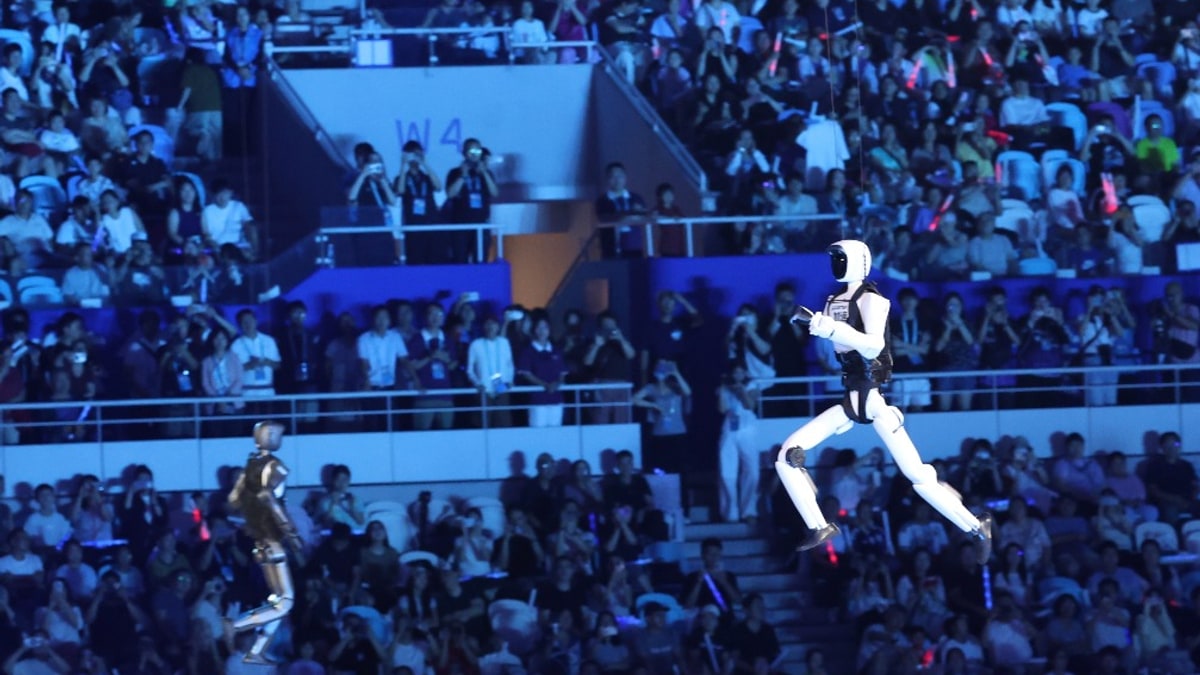
The world of robotics has achieved a new athletic milestone, as Honor's Lightning humanoid robot outpaced Usain Bolt's legendary 100-meter sprint record, signaling a significant leap in embodied AI capabilities. This achievement highlights the accelerating progress in developing robots that can perform complex physical tasks with unprecedented speed and precision.
Chinese smartphone manufacturer Honor's humanoid robot, Lightning, has set a new benchmark in physical AI, completing a 100-meter sprint in an astonishing 9.32 seconds. This time surpasses Usain Bolt's 2009 world record of 9.58 seconds, marking a pivotal moment for robotics. The feat occurred during a preparatory test event for the 2nd World Humanoid Robot Games in Beijing, where Lightning reached a peak speed of 14.5 meters per second.
This achievement is not an isolated incident; another humanoid, X-Humanoid, also broke Bolt's record with a time of 9.39 seconds during the official games. Such performances underscore the rapid advancements in bipedal locomotion and real-time decision-making for robots. These machines are increasingly demonstrating capabilities that were once considered exclusive to human athletes, pushing the boundaries of what embodied AI can accomplish.
The competitive environment of events like the World Humanoid Robot Games serves as a critical accelerator for innovation in the field. By setting ambitious athletic challenges, these games encourage robotics companies to refine their designs, improve control algorithms, and enhance the physical resilience of their creations. Honor's Lightning, for instance, has also previously demonstrated its endurance by winning the Beijing half marathon in April, completing the 21 km race in 50 minutes and 26 seconds, a pace faster than the elite men's human world record.
The implications of these advancements extend far beyond sports. The underlying technologies enabling such speed and agility in humanoid robots could revolutionize industries requiring complex physical interaction, from logistics and manufacturing to disaster response and personal assistance. As robots become more adept at navigating and manipulating the physical world, their potential applications will expand dramatically, paving the way for more integrated human-robot collaboration and autonomous operations in diverse environments.
INTELLIGENCE BRIEF
WHY IT MATTERS
This achievement by Honor's Lightning robot signifies a major step forward in embodied AI, demonstrating that robots can now surpass human physical limits in speed and agility. It highlights the rapid convergence of advanced robotics, AI, and engineering, pushing the boundaries of what autonomous systems can achieve. This progress is crucial for developing versatile robots capable of operating in complex, unstructured environments.
WHO IS INVOLVED
Honor (Chinese smartphone maker), Lightning humanoid robot, X-Humanoid (another humanoid robot), World Humanoid Robot Games organizers.
MARKET IMPACT
The record-breaking performance of humanoid robots in athletic events will accelerate research and development in bipedal locomotion, real-time control, and energy efficiency. This will likely lead to more capable and adaptable robots for various industries, potentially redefining tasks in logistics, manufacturing, and even personal services, while also intensifying the global competition in advanced robotics.
This story was drafted with AI assistance and reviewed by TurkSpark editors before publication. Facts, figures, and names may be inaccurate — verify important details independently.
Veeda AI Secures $90M Seed Round to Build 'World Models' for Physical AI
Read
Noitom Robotics Releases Massive HiPHI Dataset to Accelerate Embodied AI Development
Read