Gama Raises €15M Seed to Mass-Produce Solar Arrays for Power-Hungry Satellites
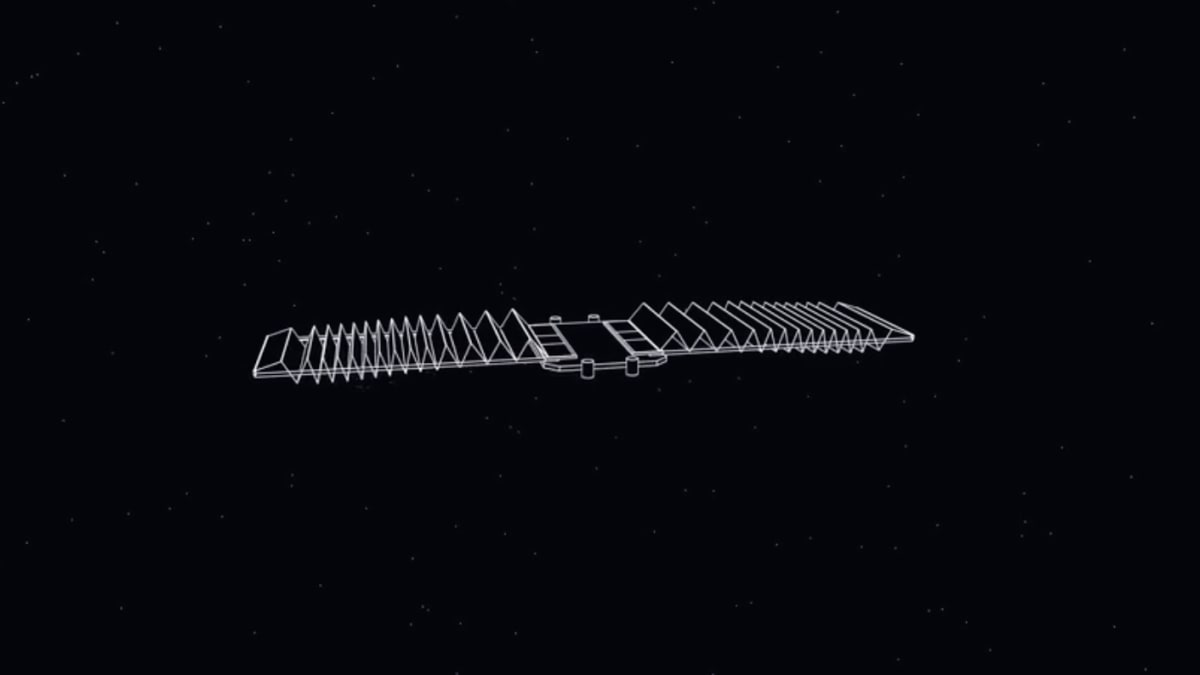
As next-generation satellite constellations demand unprecedented levels of electricity, French space-tech startup Gama has raised €15 million to mass-produce ultra-light deployable solar arrays using terrestrial silicon cells.
For years, the primary bottleneck in the commercial space economy was the cost of reaching orbit, but as launch prices have plummeted, the constraint has shifted to power. Direct-to-device networks and orbital data centers require significantly more electricity than legacy satellites, yet their solar arrays must still fold into standard rocket fairings. To break this bottleneck, Paris-based Gama has secured a €15 million seed round led by Transition, Planet A, Draper Associates, and Manta Ray to fund its first high-volume production line.
Most satellite manufacturers rely on highly specialized III-V solar cells, which are produced in small batches by a handful of suppliers and often come with lead times exceeding a year. Gama bypasses this fragile supply chain by adapting mass-produced terrestrial silicon cells—the same technology used for rooftop solar—for the space environment. Its flagship product, Wing, integrates solar generation and power management into a single deployable unit, shifting the complexity of stabilizing large arrays from rigid hardware to software algorithms.
The startup is already gaining traction among operators building power-hungry infrastructure, recently signing a partnership with Eclipse Space to supply arrays for its upcoming satellites. With its new capital, Gama will expand its manufacturing facility in Ivry-sur-Seine and scale its engineering team. The company is targeting six-month lead times and a first orbital demonstration in the summer of 2027.
INTELLIGENCE BRIEF
WHY IT MATTERS
The shift from bespoke space-grade components to mass-produced terrestrial technologies is essential for scaling the orbital economy. By commoditizing satellite power systems, Gama could significantly lower the barrier to entry for startups building complex in-space infrastructure.
WHO IS INVOLVED
Andrew Nutter (CEO), Daniel Chapman (CTO), Transition, Planet A, Draper Associates, Manta Ray, Eclipse Space
MARKET IMPACT
As space infrastructure scales, the demand for cheap, reliable power is outpacing the supply of traditional space-grade solar cells. Gama's approach could alleviate a major supply chain bottleneck for constellation operators.
This story was drafted with AI assistance and reviewed by TurkSpark editors before publication. Facts, figures, and names may be inaccurate — verify important details independently.
SEOPS Inks Multi-Launch Deal With Stoke Space to Secure Rideshare Capacity on Nova Rocket
Read
Warsaw-Based Asynchronics Raises $3.1M to Build the Digital Twin Engine for Spacecraft
Read