FuriosaAI Scales Production of RNGD AI Chips to 20,000 Units Amidst Market Bottlenecks
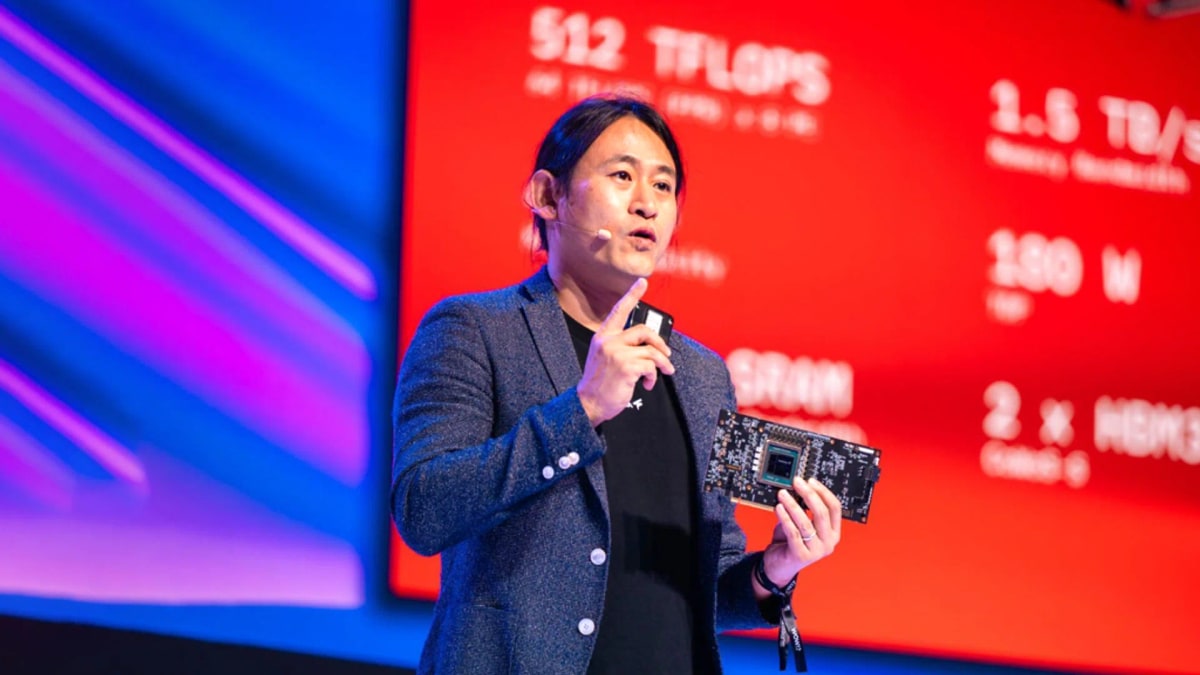
As the AI industry grapples with critical chip production bottlenecks, South Korean startup FuriosaAI is set to scale its specialized AI accelerators, RNGD, to 20,000 units in 2026, intensifying competition in the global AI hardware market.
The global artificial intelligence sector is experiencing unprecedented growth, yet this expansion is increasingly constrained by the limited availability and high cost of specialized AI chips. While Nvidia currently dominates the market, numerous startups are emerging to offer alternative, often more energy-efficient, solutions. FuriosaAI, a South Korean firm founded in 2017, is one such player, navigating these challenges by securing production for its advanced AI chips and setting ambitious output targets for the current year.
The company's flagship product, the RNGD (pronounced "renegade") chip, is a second-generation Neural Processing Unit (NPU) specifically designed for deep learning inference across large language models (LLMs), multi-modal AI, and vision models. These chips are fabricated using TSMC's 5nm process technology, a critical factor in their performance and power efficiency. After delivering an initial batch of 4,000 units with assembly partner Asus, FuriosaAI plans to produce an additional 16,000 units, bringing its total 2026 output to 20,000 RNGD chips, each estimated to cost around US$10,000.
FuriosaAI differentiates itself through its proprietary Tensor Contraction Processor (TCP) architecture, which optimizes complex tensor operations essential for high-performance AI computations. The RNGD chip offers impressive performance metrics, including 512 TOPS for INT8 workloads, while maintaining a power-efficient 180W profile, making it suitable for air-cooled data centers. Furthermore, its software stack supports advanced features like Single Root I/O Virtualization (SR-IOV), allowing a single chip to be partitioned into multiple isolated NPU instances for multi-tenant cloud environments.
This scaling of production by FuriosaAI reflects a broader industry trend where specialized AI hardware is becoming crucial for sustainable AI development. By focusing on inference workloads and power efficiency, companies like FuriosaAI aim to reduce the total cost of ownership for AI data centers, offering a viable alternative to general-purpose GPUs. The ability to secure foundry access and deliver at scale is a significant challenge for many AI chip startups, making FuriosaAI's current production ramp-up a notable achievement in a highly competitive market.
INTELLIGENCE BRIEF
WHY IT MATTERS
FuriosaAI's ability to scale production of its specialized AI inference chips addresses a critical bottleneck in the rapidly expanding AI industry. By offering power-efficient and high-performance alternatives to general-purpose GPUs, the company contributes to more sustainable and cost-effective AI infrastructure, which is vital for the widespread adoption of advanced AI models. This also highlights the growing maturity and diversification of the AI hardware ecosystem beyond established giants.
WHO IS INVOLVED
FuriosaAI [https://furiosa.ai], June Paik (Co-founder and CEO of FuriosaAI), TSMC, Asus, I/ONX HPC, Velox.
MARKET IMPACT
The scaling of specialized AI chip production by companies like FuriosaAI is crucial for alleviating supply chain pressures and fostering innovation in AI hardware. It drives down the cost and energy consumption of running complex AI models, making advanced AI more accessible and economically viable for data centers and enterprises globally. This intensifies competition, pushing established players to innovate further in efficiency and performance.
This story was drafted with AI assistance and reviewed by TurkSpark editors before publication. Facts, figures, and names may be inaccurate — verify important details independently.

Point2 Technology Secures $136 Million Series B to Accelerate AI Data Center Interconnects
Read
EYOU Robotics Secures Over 200 Million Yuan to Scale Humanoid Robot Joint Production
Read