Etched Seeks Up to $20 Billion Valuation for Specialized AI Inference Chips
The intense demand for specialized AI hardware is driving unprecedented valuations, with AI chip startup Etched reportedly pursuing concurrent funding rounds that could value the company at up to $20 billion. This move signals a significant shift towards purpose-built silicon for AI inference workloads, challenging the dominance of general-purpose GPUs.
The artificial intelligence sector is witnessing a strategic pivot towards specialized hardware, particularly for AI inference—the process of running trained models to generate responses. While Nvidia's general-purpose GPUs have long dominated both AI training and inference, startups like Etched are betting on application-specific integrated circuits (ASICs) to deliver superior efficiency and cost-effectiveness for specific AI tasks. This specialization aims to address the growing need for optimized compute power as AI models become more complex and widespread.
Etched, a San Jose-based AI chip startup, is currently negotiating two venture funding rounds that could dramatically increase its valuation. One round, led by existing investor Jane Street, targets a $20 billion valuation, quadrupling its prior assessment. Concurrently, Sequoia Capital is leading a separate round aiming for a $10 billion valuation. These deals, while not yet closed, highlight intense investor confidence in Etched's approach and the broader market's hunger for alternatives to existing AI hardware solutions.
The company's flagship product, the Sohu chip, is a specialized ASIC designed specifically for transformer architectures, which underpin most modern large language models. Etched claims its architecture can run math blocks at significantly lower voltages, leading to multiple times the FLOPs density of current AI chips without thermal throttling. This focus on optimizing for transformer workloads promises best-in-class throughput, latency, and power efficiency for inference tasks.
Despite not yet achieving large-scale commercial deliveries, Etched has garnered substantial interest, with its website indicating approximately $1 billion in expressed customer demand. The startup, founded in 2022 by Harvard dropouts Gavin Uberti, Chris Zhu, and Robert Wachen, views its strategy as building a new category of AI hardware: frontier inference clusters. Their vertical integration, from chip design to manufacturing methods, aims to scale quickly to meet the demands of next-generation AI.
This aggressive fundraising and valuation target underscore a critical trend in the AI industry: the move beyond general-purpose computing towards highly specialized, efficient hardware. As AI applications proliferate, the economic and performance advantages of purpose-built chips for inference are becoming increasingly apparent, fostering a competitive landscape where new players can challenge established giants by focusing on specific, high-value workloads.
INTELLIGENCE BRIEF
WHY IT MATTERS
This development is crucial because it highlights the increasing specialization within the AI hardware market. As AI models grow, the need for energy-efficient and high-performance inference becomes paramount, creating opportunities for startups to carve out significant niches against general-purpose chip giants. It also signals robust investor appetite for foundational AI infrastructure.
WHO IS INVOLVED
Etched (founders: Gavin Uberti, Chris Zhu, Robert Wachen), Jane Street, Sequoia Capital.
MARKET IMPACT
The pursuit of such high valuations by Etched could intensify competition in the AI chip market, pushing innovation in specialized hardware. It suggests a future where AI infrastructure is more fragmented, with different chips optimized for distinct AI workloads, potentially leading to lower costs and greater efficiency for AI deployment.
This story was drafted with AI assistance and reviewed by TurkSpark editors before publication. Facts, figures, and names may be inaccurate — verify important details independently.
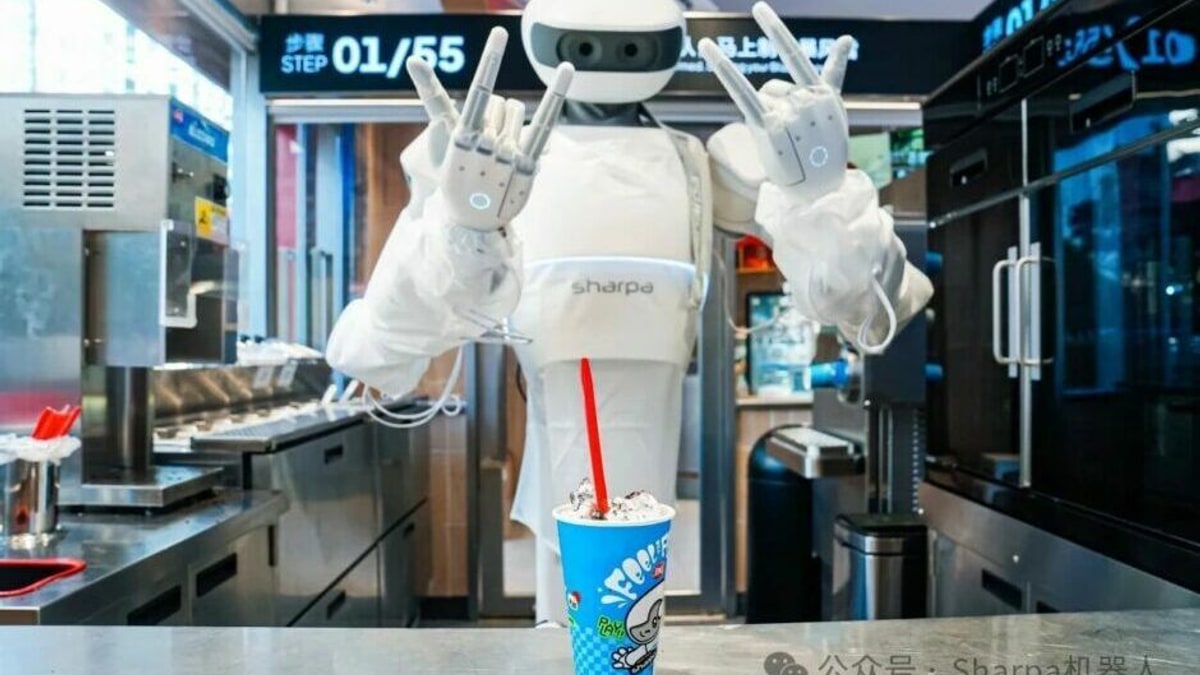
Sharpa Secures $669M for AI Robotics, Unveils Fully Automated Robot Restaurant
Read
Kantoko Secures $3.5 Million Seed Funding to Expand AI-Powered ADHD Care Platform
Read