ADA Space Launches 8 Satellites to Test AI Foundation Model Training in Orbit
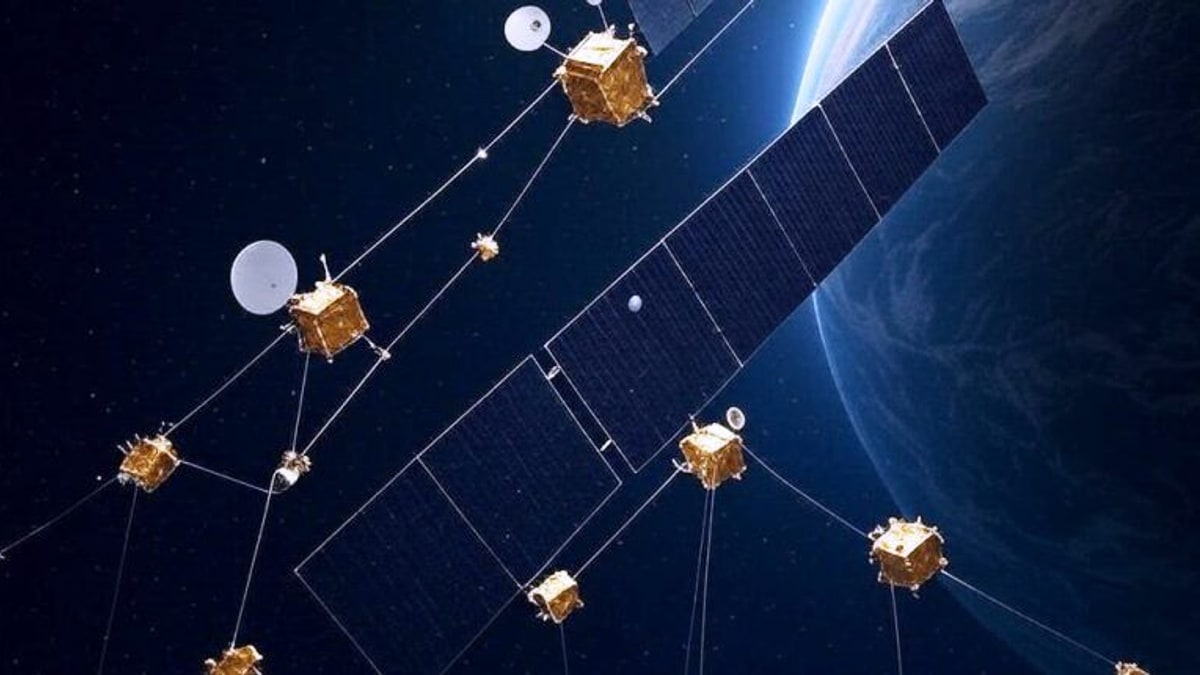
As the AI boom strains terrestrial power grids, Chinese startup ADA Space is pushing compute to orbit with a new satellite batch designed to train foundation models in space.
The physical constraints of terrestrial data centers—namely power limits and massive cooling demands—are pushing the artificial intelligence industry to look beyond Earth. On Wednesday, Chinese commercial space startup ADA Space launched eight computing satellites aboard a LandSpace Zhuque-2E rocket to test training AI foundation models directly in orbit.
The satellites form the second batch of the company's "Star Compute" constellation, a planned 2,800-node orbital network designed to function as a decentralized space data center. Unlike traditional Earth observation satellites that must beam massive volumes of raw data down to ground stations for processing, these units are equipped with 10-kilowatt liquid-cooling systems, large radiative wings, and high-speed laser links. This hardware allows the satellite swarm to process data, run inference, and now test model training autonomously in the vacuum of space.
While Western companies are exploring space-based data storage and basic edge inference, ADA Space is attempting the much more compute-intensive task of model training. If the thermal management systems hold up against orbital radiation and heat, this architecture could drastically reduce the latency of satellite networks, allowing them to analyze global data in real time and transmit only the final insights back to Earth.
INTELLIGENCE BRIEF
WHY IT MATTERS
Moving AI compute to orbit solves terrestrial energy bottlenecks but introduces extreme thermal and radiation challenges. ADA Space's test of 10-kilowatt liquid cooling in a vacuum is a critical step toward making space-based data centers a reality.
WHO IS INVOLVED
ADA Space, LandSpace
MARKET IMPACT
If successful, in-orbit model training could drastically reduce the bandwidth costs and latency of Earth observation networks, shifting the space economy from raw data collection to real-time intelligence.
This story was drafted with AI assistance and reviewed by TurkSpark editors before publication. Facts, figures, and names may be inaccurate — verify important details independently.
Polish Spacetech KP Labs Secures €4.4M to Scale AI-Powered Satellite Data Processing in Orbit
Read
Starcloud Secures $250M at $2.3B Valuation to Move AI Workloads into Orbit
Read